A phone conversation while driving blinds the brain to unexpected objects that may come in our path. The crew of Air Canada carrying out a visual...

Gurukul for Safety


A phone conversation while driving blinds the brain to unexpected objects that may come in our path. The crew of Air Canada carrying out a visual...
A high-reliability organization is an organization that has succeeded in avoiding catastrophes despite a high level of risk and complexity.

A few hundred thousand dollar fix for the Challenger space ship deferred cost about a billion dollar loss. Building a generative safety culture is a...
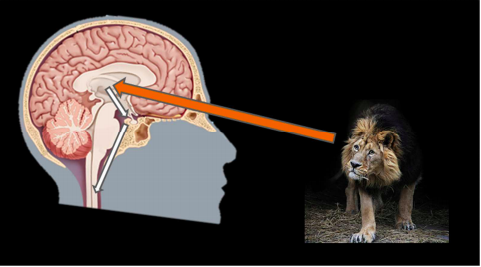
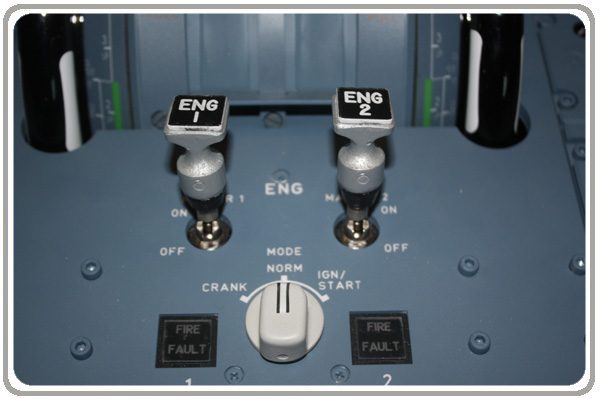
Background Startle and surprise are often cited as potentially contributing factors to aircraft incidents due to their possible negative effects on flight crew performance. In the past, these terms have often been used interchangeably; however, there are distinctive conceptual, behavioural, and physiological differences between the startle reflex and the surprise emotion. The prevalence of startle and surprise on the flight deck has been investigated by examining voluntary incident reports in the Aviation Safety Reporting System (ASRS). Surprise has been found to be more prevalent than startle.
...
Errors in Aviation Decision making, bad decisions or bad luck!

Inattentional blindness, Cognitive bias and poor crew training standards lead to the near world worst air disaster. How could two pilots execute an...

Nothing beats experience. In his bestselling book Outliers (Gladwell & Rea,2008), Malcolm Gladwell advocates that 10,000 hours is the amount of time it takes to get good at anything "the magic number of greatness." Indeed with experience comes a more in-depth and more accurate understanding of the subject matter. The theory is criticized by many experts. They believe that practice alone cannot qualify anyone as an expert. As per a Princeton study: • In games, practice made for a 26% difference • In music, it was a 21% difference • In sports, an 18% difference • In education, a 4% difference • In professions, just a 1% difference What should be the qualification of a trainer? Should the trainer be just competent like a line pilot or should she/he have a higher level of qualification? The industry uses the terms proficient and competent interchangeably. Competency-based training methodologies use the term expert when describing the trainers. These methodologies, however, do not define what an expert is. Let us look at the level of skill development. The Dreyfus model of Skill Acquisition The Dreyfus model classifies skill acquisition into five levels (Dreyfus,2004). It is an overarching integrative approach to professional activities, which incorporates both routings and the decisions to use them, while still maintaining that the term ‘skilled behaviour connotes semi-automatic rather than deliberative processes. Novice Rigid adherence to taught rules or plansLittle situational perceptionNo discretionary judgment Advanced Beginner Guidelines for action based on attributes or aspects Situational perception still limited All attributes and aspects are treated separately and given equal importance Competent Coping with crowdednessNow sees actions at least partially in terms of longer-term goalsConscious, deliberate planningStandardized and routinized procedures Proficient See situations holistically rather than in terms of aspectsSee what is most important in situationPerceives deviations from the normal patternDecision making less labouredUses maxims for guidance, whose meaning varies according tothe situation Expert No longer relies on rules, guidelines or maximsIntuitive grasp of situations based on the deep tacit understandingAnalytical approaches used only in a novel situation or when problems occurThe vision of what is possible
...
