


The Perils of Conformity: A Lesson from a Critical Flight Incident
Table of Contents
Introduction to conformist
In an ever-evolving world, conformity plays a significant role in shaping human behavior. While it helps maintain social harmony, there are instances where conformity can lead to serious, even life-threatening consequences. The aviation industry, with its stringent protocols and high-pressure environment, is not immune to the pitfalls of confirmism. A recent incident involving a Boeing 777 underscores the dangers of blind adherence to authority, revealing how conformist behavior can compromise safety.
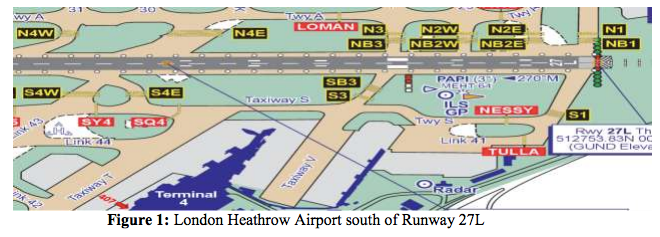
The Directorate General of Civil Aviation (DGCA) of India recently released a final investigation report regarding a critical aviation incident. A Boeing 777 (B-777) departing from London Heathrow’s Runway 27L at intersection S4E crossed the runway threshold at just 16 feet, far below the minimum required height of 35 feet. The event raised serious questions about human factors, especially regarding confirmism within hierarchical structures in the cockpit.
This case is not just an aviation anomaly but a demonstration of how conformity—whether due to inexperience or undue respect for authority—can result in miscalculations with potentially disastrous consequences.
The Incident: Miscommunication and Miscalculations
The flight’s commander, a senior pilot with over 13,000 hours of flying experience, had used the onboard performance tool (OPT) to calculate the aircraft’s takeoff speeds and thrust settings. However, he selected the wrong intersection option for his calculations. Instead of using the correct intersection S4W, he mistakenly used the “First 4” option, which corresponds to the first four intersections on the north side of Runway 27L (NB1, NB2E, NB2W, and NB3).
The co-pilot, a far less experienced crew member with fewer than 3,000 hours of flight experience, had initially performed her calculations correctly. However, when she noticed the commander had used a different intersection in his calculation, she changed her settings to match the senior pilot’s. This decision to conform to the senior pilot’s choices, without further questioning or verification, resulted in both pilots sharing the same erroneous performance figures for the aircraft’s takeoff.
Had the commander not realized that the aircraft was rapidly approaching the end of the runway by observing the centerline lights, the consequences could have been catastrophic. The aircraft barely cleared the end of the runway at 16 feet and climbed to 112 feet by the time it reached the perimeter road, a situation far too close for comfort. This near-disaster offers a profound example of how conformity, especially within high-pressure, hierarchical environments, can compromise safety.
Conformist in Action: Insights from Social Psychology
To understand this incident better, it is helpful to delve into the psychology of conformity. In his famous book, The Social Animal, renowned psychologist Elliot Aronson describes humans as inherently social animals. Society, he posits, exists before the individual, and as social creatures, people tend to conform to avoid conflict, to be accepted, or to simply fit in. Conformity, as Aronson defines it, is a change in behavior or opinion due to real or imagined pressure from others.
Solomon Asch’s 1951 experiment provides a classical demonstration of how social pressure can lead to conformity. Asch’s line judgment task required participants to choose a line that matched the length of a reference line. The task was simple, and the correct answer was obvious. However, when placed in a room with confederates (actors pretending to be fellow participants) who all gave the wrong answer, about 32% of the real participants conformed with the incorrect majority opinion during critical trials. Over the course of the study, a staggering 75% of participants conformed at least once.
The findings revealed that individuals often conform for two reasons:
- Normative Influence: The desire to fit in with the group.
- Informational Influence: The belief that the group is better informed than oneself.
The parallels to the aviation incident are striking. The co-pilot, inexperienced and facing the authority of a more seasoned commander, likely felt both normative and informational pressures. The captain’s experience may have led the co-pilot to believe that the senior pilot’s judgment was superior, prompting her to override her own correct calculations and match the commander’s erroneous settings.
The Dangers of Blind Conformist in Aviation
In aviation, where decisions can have life-or-death consequences, confirmity can be especially dangerous. In this case, the co-pilot’s reluctance to question the commander’s calculations was a classic example of conformist behavior in a hierarchical setting. Rather than assertively raising her concerns, she chose to align her actions with the more experienced crew member, possibly out of fear of being perceived as overly cautious or undermining authority.
Had the co-pilot been more assertive, the discrepancy in takeoff speeds might have been caught. This incident underscores the need for a culture that encourages questioning and cross-verification, especially in high-stakes environments like aviation.
Hierarchical Confirmsim in Aviation Culture
Hierarchical confirmity, where junior team members unquestioningly follow the lead of more senior personnel, is not unique to this incident. It is a well-documented issue in various industries, particularly in fields like healthcare, military operations, and aviation. When lower-ranked individuals feel undue pressure to conform to the decisions of their superiors, it can lead to errors being overlooked or, worse, unchallenged.
In this particular flight incident, the co-pilot’s hesitation to challenge the commander reflects a broader issue of confirmism in aviation. While respect for hierarchy and authority is essential, it should not come at the expense of safety. Crew Resource Management (CRM) training, designed to foster communication, teamwork, and assertiveness among flight crew members, aims to mitigate such risks. Yet, as this case demonstrates, there is still work to be done in encouraging less-experienced crew members to speak up, even when they are unsure.
Expertise vs. Attention: The Gladwell 10,000-Hour Rule
Interestingly, the commander in this incident had amassed over 13,000 flying hours, which, according to Malcolm Gladwell’s popular “10,000-Hour Rule,” suggests that he was an expert. Gladwell’s theory posits that 10,000 hours of practice can lead to mastery in any field. However, expertise does not eliminate the potential for human error, especially when attention lapses or overconfidence creeps in.
In this case, the commander’s familiarity with the aircraft’s performance calculator may have contributed to his mistake. The selection of the wrong intersection for takeoff performance could have been due to distraction or a simple oversight. Expertise, while invaluable, must always be coupled with attentiveness and mindfulness, particularly in an environment as unforgiving as aviation.
Avoiding the Trap of Conformist
So, how can future incidents like this be prevented? One solution lies in fostering a non-conformist culture within the cockpit and broader aviation operations. Co-pilots, flight attendants, and even ground crew must feel empowered to raise concerns or question decisions without fear of reprisal. This shift in mindset requires robust CRM training that emphasizes assertiveness and communication.
Furthermore, the aviation industry can benefit from technological advancements designed to catch human errors. While checklists and performance calculators are essential tools, they are not infallible. As demonstrated in this incident, when both pilots used the same erroneous data, the systems failed to flag the discrepancy. Ensuring that technology cross-verifies data across different systems can add an additional layer of safety.
Conclusion: A Cautionary Tale of Conformity
The near-disaster involving the B-777 at Heathrow serves as a cautionary tale about the dangers of conformity in high-stakes environments. Whether due to respect for authority, lack of assertiveness, or simple oversight, confirmism can have grave consequences. The incident highlights the importance of open communication, attentiveness, and the willingness to question even the most experienced authorities. By addressing the human factors that lead to confirmity, the aviation industry can take critical steps toward ensuring safer skies.
As we reflect on this event, it becomes clear that conformity, while often necessary for societal cohesion, must be balanced with critical thinking and assertiveness—especially when lives are at stake.
Discover more from Safety Matters Foundation
Subscribe to get the latest posts sent to your email.
Most interesting and commendable investigation, hence the reblog. Kudos.
Interesting post indeed!
Thank you, appreciate your feedback.
It is incisive paper that contains educative
Prognosis.Also check with span of attention as in psychology.
Thanks, yes will check for down of attention.