


Flying Curious: Why Pilots Who Keep Asking ‘Why’ Fly Safer and Smarter
Table of Contents
From the guest author’s desk
When people think of inquisitive pilots, they usually picture someone precise, composed, and methodical. And sure, that’s part of the story. But there’s something else, something less talked about yet just as vital: curiosity. The kind of curiosity that doesn’t fade after the exams are over. The type that keeps poking and wondering long after the checklist has been ticked off. In aviation, curiosity isn’t just nice to have. It’s what keeps you alive.
Aviation is Science- And You Have to Think Like a Scientist!
Flying isn’t just about muscle memory or mechanical repetition.
It’s about understanding forces you can’t even see—air pressure, lift, gravity, mechanical strain, and human limitations.
You’re not just flying a machine but navigating a constantly changing puzzle; if you don’t feel an itch to ask why and how at every step, you’re only skimming the surface of what it truly means to be an inquisitive pilot. Because, when things go sideways – and they eventually do – memorised procedures will only get you so far. Understanding the “why” behind every switch, every checklist, and every protocol? That’s what makes the difference between coping and commanding.
The best pilots aren’t just operators. They’re thinkers.
Mediocrity Creeps Up Quietly
Here’s something uncomfortable but true:
You can easily become a “good enough” pilot without ever being a great one.
You can pass exams, log flight hours, and still operate well below your potential simply because you stopped being curious. And honestly, if you’re not a little bit crazy about this profession, if you’re not borderline obsessive about learning more every single day, you’ll stay stuck in the average lane.
You’ll miss the subtle signs- a slight engine vibration, a change in control responsiveness, an unusual cloud pattern- because you won’t be looking for them. You will stop questioning and start assuming. And in aviation, assumptions are a slow road to danger.
The ones who soar in this field aren’t the ones with the smoothest landings early on. They’re the ones who are relentless about asking themselves, “What did I miss?” even after a perfect flight.
Small Questions, Big Difference
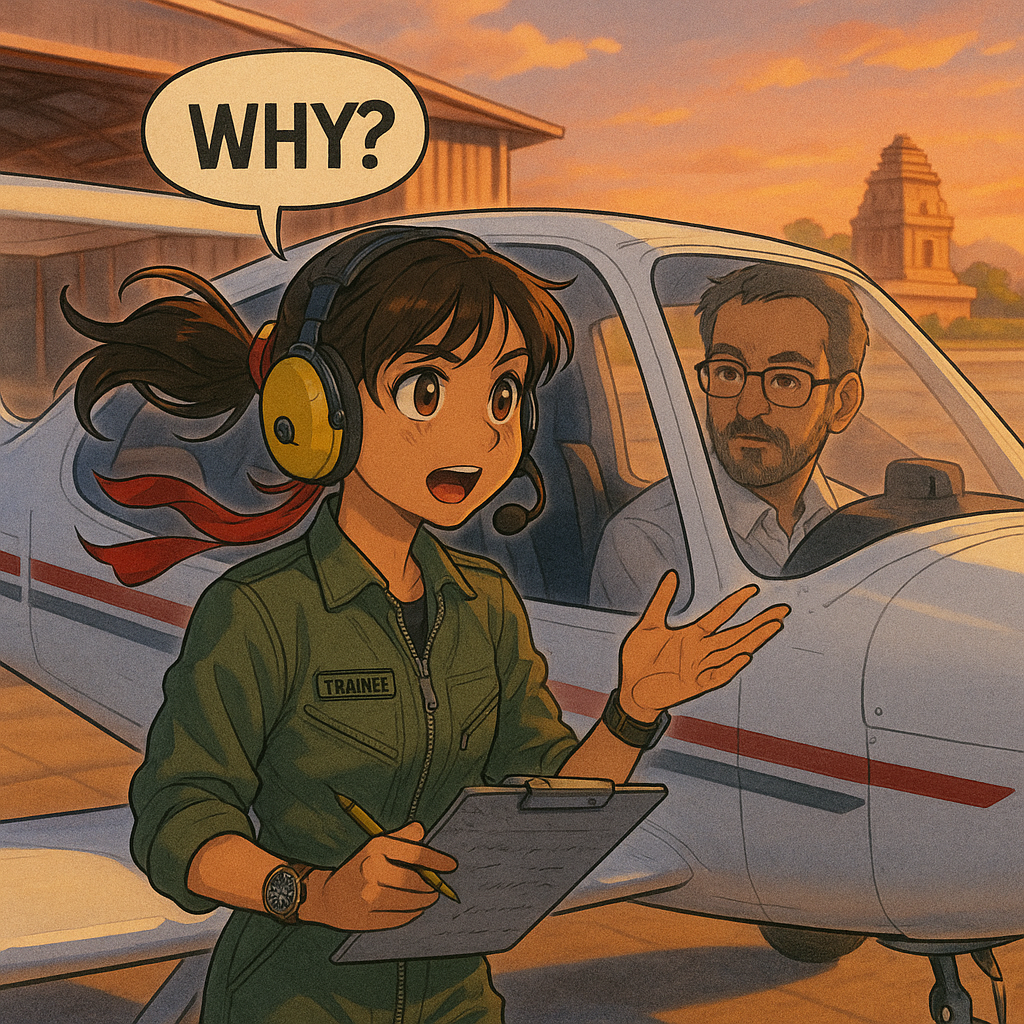
Curiosity isn’t just about dramatic moments. It is about small, nagging questions that most people ignore:
• Why did that turbulence feel different today?
• Why is the fuel burn slightly higher than usual?
• Why is my approach path drifting even though the wind is steady?
• Is my crosswind landing technique slipping without me realising it?
Pilots who keep asking small questions sharpen their instincts over time. They spot patterns early, catch errors before they snowball, and build resilience quietly, flight after flight.
Pilots who don’t?They get surprised. And surprises at 10,000 feet are rarely good.
Healthy Obsession: The Secret Ingredient
These days, we hear a lot about work-life balance, about not being “too obsessed” with work. Fair enough – in most fields, that advice makes sense. But in aviation? A healthy, burning obsession with details is not just okay- it’s vital. The best pilots I’ve met – and the ones I’ve read about- share a certain spark. They’re a little intense about their checklists.
They read aircraft manuals for fun. They get nerdy about weather briefings.
They replay their flights, picking apart what they could have done differently. And here’s the thing: they’re not scared. They’re respectful. They respect the complexity of what they’re doing. They respect how quickly things can turn if they ever stop paying attention. It’s not fear that makes them obsessive. It’s love for the craft, which is why they stay sharp year after year.
Building Curiosity Into Your Flying Life
If you want to build a mindset that serves you for decades, start now:
• Dig deeper. Don’t just memorise procedures; understand why they exist. Explore accident reports, system manuals, and human factors studies.
• Ask uncomfortable questions. Especially about yourself. What’s a habit you’ve picked up that could bite you later?
• Staying a student. Always. Aviation evolves. Weather science evolves. Cockpit technology evolves. Stay hungry.
• Debrief religiously. Every flight deserves a review, even (especially) the ones that went well.
• Surround yourself with mentors. The ones who’ll challenge your assumptions, not just pat your back.
Final Thoughts: Stay Curious, Stay Sharp
Flying is a privilege. Every time we step into an aircraft, we’re stepping into a world of physics, biology, meteorology, law and human judgment- all swirling together, all demanding our full attention.
If you want to be a genuinely great pilot-not just a safe one, but a wise one-you need more than skills. You need a mind that won’t stop wondering. You need a little bit of that restless, obsessive, nerdy curiosity that made you fall in love with flying in the first place. So ask the silly questions. Stay nerdy. Stay a little crazy about it. Because in the skies, curiosity doesn’t just make you smarter. It keeps you alive!
Discover more from Safety Matters Foundation
Subscribe to get the latest posts sent to your email.
Leave a Reply